
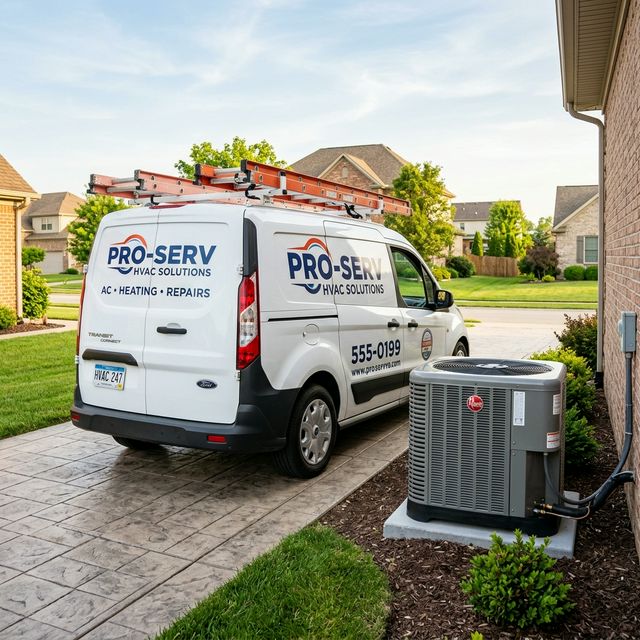
It's 2 AM on the hottest night in July. A homeowner's AC unit dies. They grab their phone, search "emergency HVAC repair near me," and call the first company that shows up — yours. The phone rings six times and goes to voicemail. They hang up and call the next company on the list. That company answers. You just lost a $900 emergency repair job because nobody was there to pick up.
This isn't a rare scenario. HVAC companies miss between 27% and 37% of inbound calls, and that number spikes during peak season when every tech is out on a job. Each missed call costs an average of $180 in lost revenue — and for emergency jobs, that figure jumps to $900 or more.
An AI receptionist changes this equation entirely. It answers every call — at 2 AM, during the summer rush, on Christmas Day — and handles everything from emergency dispatch to appointment scheduling, without you hiring another person.
The HVAC Phone Problem: Why You're Bleeding Revenue
Most HVAC business owners already know they miss calls. What they underestimate is the math behind those missed calls.
Here's what the data shows:
- 40% of HVAC calls come in after regular business hours. Evenings, weekends, and holidays are when emergencies happen — furnace failures in January, AC breakdowns in August.
- 85% of callers who reach voicemail won't call back. They're uncomfortable, stressed, and moving on to the next contractor immediately.
- 78% of customers choose the first company that answers. Speed to answer literally determines who gets the job.
- Lost annual revenue from missed calls can range from $50,000 to $126,000+ for a single HVAC business, depending on call volume and average ticket size.
Traditional solutions don't solve this well. Hiring a dedicated receptionist costs $4,200–$6,000/month and still leaves evenings and weekends uncovered. Live answering services run $300–$1,500/month — and most operators don't know the difference between a compressor failure and a thermostat reset. Voicemail? We just covered why that doesn't work.
How AI Receptionists Solve HVAC's Biggest Challenges
An AI receptionist isn't a glorified voicemail. It's a trained virtual operator that understands HVAC terminology, handles real conversations, and takes action — booking appointments, dispatching emergency calls, and qualifying leads — around the clock.
24/7 Emergency Call Triage
When a caller says "my furnace is making a banging noise and there's a strange smell," your AI receptionist recognizes this as an urgent situation. It collects the caller's address, confirms the issue details, and immediately escalates to your on-call technician while keeping the customer informed.
The AI is trained to distinguish between true emergencies (no heat in winter, gas smell, AC failure during a heat wave) and routine requests (seasonal tune-up, thermostat question, filter replacement). Emergency calls get routed instantly. Routine calls get scheduled during your next available window.
This triage capability means your on-call tech isn't getting woken up at midnight for a question about programmable thermostats.
After-Hours Booking Without Missed Leads
Most HVAC calls that come in after 5 PM aren't emergencies — they're homeowners who got home from work and finally have time to call about that weird noise their AC has been making. These are your bread-and-butter maintenance and repair appointments.
An AI receptionist books these callers directly into your calendar. It checks availability, confirms the appointment type, and sends the customer a confirmation — all without a human touching anything. When your office manager arrives the next morning, the schedule is already filled with leads that would've gone to voicemail (and then to your competitor).
Seasonal Surge Management
Every HVAC owner knows the pattern: phones explode the first week temperatures hit 95°F, and again when the first cold snap arrives. Your team of three can't answer 200 calls a day while running jobs.
An AI receptionist handles unlimited simultaneous calls. While your human staff is dispatching techs and managing jobs, the AI is answering the overflow — booking maintenance appointments, answering "do you service my area?" questions, and qualifying new customer inquiries. No hold music. No "all operators are currently busy."
During the 2024 summer season, HVAC companies using AI call answering reported handling 3x the call volume compared to the prior year without hiring additional front-office staff.
Intelligent Lead Qualification
Not every call is a high-value opportunity. Some callers want a quote comparison and will never book. Others have a system that's 25 years old and need a full replacement — a $10,000+ job.
The AI asks qualifying questions you define: What's the issue? How old is your system? What's the square footage of your home? Is this a warranty item? Then it tags the lead with the right priority so your sales team can focus on the calls worth their time.
The Real Cost Comparison: AI vs Your Current Setup
Let's run the numbers HVAC owners actually care about.
| Solution | Monthly Cost | After-Hours Coverage | Emergency Dispatch | Simultaneous Calls | HVAC Knowledge |
|---|---|---|---|---|---|
| In-house receptionist | $4,200–$6,000 | ❌ No | Manual | 1 at a time | Trainable |
| Live answering service | $300–$1,500 | ✅ Yes | Limited | 1 at a time | Generic scripts |
| AI receptionist | $79–$299 | ✅ Yes | ✅ Automated | ✅ Unlimited | ✅ HVAC-specific |
| Voicemail | Free | Technically yes | ❌ No | N/A | N/A |
An AI receptionist costs a fraction of every alternative and delivers more capability. At $79–$299/month, recouping the investment takes exactly one captured emergency call that would've gone to voicemail.
For the average HVAC company missing 30% of calls — that's roughly $50,000 in recoverable revenue per year at the low end. The ROI isn't a question mark.
What HVAC Companies Should Look for in an AI Receptionist
Not all AI phone systems are built for field service businesses. Here's what actually matters for HVAC:
Emergency Escalation Rules
Your AI needs configurable urgency detection. Words like "gas leak," "no heat," "burning smell," and "flooding" should trigger an immediate escalation path to your on-call tech. You should be able to define what qualifies as an emergency and what gets scheduled for the next business day.
Integration with Your Dispatch Software
If your team runs on ServiceTitan, Housecall Pro, or Jobber, the AI needs to play nicely with your existing stack. Real-time calendar sync is table stakes — it prevents double-bookings and keeps your dispatch board accurate.
Service Area Awareness
When someone calls from two counties over, the AI should know whether you serve that zip code. A good AI receptionist checks service area boundaries before booking, so your tech doesn't drive 90 minutes to a job you can't profitably serve.
Seasonal Script Flexibility
Your call flow in January (heating emergencies, furnace tune-ups) is completely different from August (AC installs, coolant recharges). The AI should adapt its scripts, questions, and scheduling rules based on the season — without you manually reconfiguring everything four times a year.
Getting Started: Stop Losing Emergency Calls This Season
Spring is the perfect time to set up an AI receptionist for your HVAC company. Summer surge is weeks away, and every day without 24/7 call coverage is revenue left on the table.
Here's the practical path:
- Map your call types. List your most common call reasons — emergency repair, maintenance booking, new install quote, warranty question, service area inquiry.
- Define your emergency rules. Which keywords and scenarios need immediate tech dispatch vs. next-day scheduling?
- Set up your calendar integration. Connect your scheduling system so the AI books real appointments.
- Run a parallel test. Keep your current phone setup and route overflow calls to the AI for a week. Compare the capture rate.
Try a live demo of Greetly AI to hear how it handles a real HVAC call scenario — from emergency triage to appointment booking. Or contact our team to discuss your specific call volume and setup.
Related reading:
- AI receptionist for veterinary clinics — another service industry where missed calls mean lost patients and delayed care
- AI receptionist for auto repair shops — a sister industry where technicians can't answer phones under the hood
- Missed calls cost small businesses real revenue — the full cost breakdown across industries
- Is an AI receptionist worth it? Real-world pros, cons, and ROI — an honest look at what you gain and what to watch out for
- How much does an AI receptionist really cost? — pricing comparison across solutions
FAQ
Can an AI receptionist handle true HVAC emergencies?
Yes. A well-configured AI receptionist uses keyword detection and caller input to identify emergencies like gas leaks, no-heat situations, and AC failures during extreme temperatures. When the AI recognizes an emergency, it collects the caller's address, describes the issue to your on-call technician via text or call transfer, and confirms with the homeowner that help is on the way. It doesn't try to troubleshoot — it gets the right person on the case immediately.
Will my customers know they're talking to an AI?
Modern AI receptionists sound natural and conversational — not like IVR phone trees or robotic menus. That said, most callers don't care whether they're talking to a human or AI at 2 AM, as long as their emergency gets handled and their appointment gets booked. The experience matters more than the technology behind it.
How long does it take to set up an AI receptionist for an HVAC company?
Most HVAC companies are fully operational within a few hours to a day. Setup involves defining your call flows (emergencies, bookings, quotes), connecting your calendar or dispatch software, and testing the system with sample calls. There's no hardware to install — it connects to your existing phone number.
What happens during power outages or internet downtime?
AI receptionists run on cloud infrastructure, so they're not dependent on your office's power or internet. If your local systems go down, the AI keeps answering calls and logging messages. When your systems come back online, you'll see every call, message, and appointment that came in during the outage.
Is an AI receptionist worth it for a one-truck HVAC operation?
Absolutely — arguably more so than for a larger company. When you're the owner, the sales rep, and the tech, you physically can't answer the phone while you're on a roof replacing a compressor. An AI receptionist at $79–$199/month captures the calls that would otherwise go to your competitors. If it saves even one $500 repair job per month, it's paid for itself multiple times over.